Introduction
Being told that you need a bone graft before receiving dental implants can be discouraging. Many patients worry about undergoing multiple surgical procedures, extended healing periods, additional expenses, and uncertainty about whether the graft will heal successfully. Fortunately, advances in modern implant dentistry have created new possibilities for many patients who were once told they were not suitable candidates for dental implants.
Today, Dental Implants Without Bone Grafting are possible for many individuals through advanced implant techniques that utilize the patient’s remaining healthy bone instead of rebuilding lost bone. Depending on the amount and location of available bone, experienced implant surgeons can often use specialized treatment approaches such as All-on-4®, All-on-6®, Basal Implants, Pterygoid Implants, and Zygomatic Implants to restore missing teeth without conventional bone grafting.
However, this does not mean that bone grafting is never required. Every patient is unique, and the most appropriate treatment depends on a comprehensive clinical evaluation, including CBCT (Cone Beam Computed Tomography) imaging, bone quality assessment, medical history, and overall oral health. The goal is always to recommend the safest, most predictable, and least invasive treatment option for each individual.
At YOUR DENTIST Advanced Dental & Maxillofacial Center, Vijayawada, every implant case is carefully planned using advanced digital diagnostics and personalized treatment planning. Whenever clinically appropriate, we utilize modern implant techniques that help many patients receive Dental Implants Without Bone Grafting in Vijayawada, reducing unnecessary surgical procedures while achieving stable, long-lasting results.
In this article, you’ll learn why bone loss occurs, when bone grafting may still be recommended, how modern implant techniques can often eliminate the need for grafting, and how experienced implant surgeons determine the most suitable treatment for every patient.
What Is Bone Loss?
Bone loss is the gradual reduction in the height, width, or density of the jawbone that normally supports your natural teeth. A healthy jawbone provides a strong foundation for both teeth and dental implants. When this bone begins to deteriorate, teeth may become loose, gums may recede, and replacing missing teeth with conventional dental implants can become more challenging.
One of the most important facts patients should know is that bone loss often progresses silently. Many people do not realize they are losing jawbone until they notice loose teeth, difficulty chewing, changes in their bite, or are informed during a dental examination.

Common Causes of Jawbone Loss
Several factors can contribute to the loss of jawbone, including:
- Gum Disease (Periodontitis): The most common cause of jawbone loss. Long-standing gum infections gradually destroy the bone supporting the teeth, eventually leading to loose teeth or tooth loss.
- Missing Teeth: After a tooth is removed or lost, the surrounding jawbone no longer receives normal chewing forces and gradually begins to shrink over time.
- Poor Oral Hygiene: Accumulation of plaque and tartar can lead to chronic gum infections, accelerating bone destruction.
- Uncontrolled Diabetes: Poorly controlled diabetes can affect healing and increase the risk of gum disease and bone loss.
- Smoking and Excessive Alcohol Consumption: These habits reduce blood supply, impair healing, and significantly increase the risk of periodontal disease.
- Osteoporosis: Reduced bone density throughout the body can also affect the jawbone.
- Hormonal Changes and Certain Medications: These may contribute to reduced bone quality in some individuals.
Signs and Symptoms of Bone Loss
Bone loss may not cause pain in its early stages, but as it progresses, patients may notice:
- Loose or shifting teeth
- Bleeding, swollen, or receding gums
- Persistent bad breath (halitosis)
- Difficulty chewing comfortably
- Changes in the way the teeth bite together
- Teeth appearing longer because the gums have receded
- Pus discharge around the gums in advanced gum disease
These symptoms should never be ignored, as they often indicate underlying periodontal disease that requires professional evaluation.
Why Bone Loss Matters for Dental Implants
Many people believe that losing jawbone automatically means they cannot receive dental implants. Fortunately, this is not always true.
While significant bone loss can make conventional implant placement more challenging, modern implant dentistry offers several advanced treatment options that utilize the remaining healthy cortical bone instead of rebuilding the lost bone through grafting. The most suitable approach depends on a detailed clinical examination, including CBCT imaging, bone quality, the location of missing teeth, and the patient’s overall oral and medical health.
Understanding the cause and extent of bone loss is the first step in determining whether Dental Implants Without Bone Grafting may be a suitable option.
Can Dental Implants Be Done Without Bone Grafting?
The answer is yes—many patients can receive Dental Implants Without Bone Grafting thanks to significant advances in modern implant dentistry.
Traditionally, bone grafting was commonly performed to rebuild areas of the jaw that had lost bone before placing conventional dental implants. While bone grafting continues to be an appropriate treatment for certain patients, it is not the only solution for replacing missing teeth.

Today, experienced implant surgeons can often utilize the patient’s remaining healthy cortical bone, which is stronger and denser than the outer alveolar bone, to securely place dental implants without rebuilding the lost bone. This approach can eliminate the need for additional grafting procedures in many suitable cases.
One of the main advantages of avoiding bone grafting is that patients may require fewer surgical procedures, experience less surgical trauma, and complete their treatment in a shorter overall time. Instead of waiting several months for a bone graft to heal before implant placement, advanced implant techniques can often allow treatment to proceed more efficiently when adequate bone is available.
However, it is important to understand that not every patient is a candidate for Dental Implants Without Bone Grafting. The most appropriate treatment depends on several clinical factors, including:
- The amount and quality of the remaining jawbone
- The location of the missing teeth
- The patient’s overall oral and medical health
- The condition of the surrounding gums
- Findings from a detailed CBCT (Cone Beam Computed Tomography) scan
Every patient has a unique oral condition. For this reason, experienced implant surgeons perform a comprehensive clinical examination and digital treatment planning before deciding whether bone grafting can be avoided safely.
In many cases, advanced implant techniques such as All-on-4®, All-on-6®, Basal Implants, Pterygoid Implants, and Zygomatic Implants make it possible to restore missing teeth by utilizing the strongest available bone instead of rebuilding lost bone. These modern treatment approaches have transformed implant dentistry and have helped many patients receive predictable, long-lasting dental implants with fewer surgical procedures whenever clinically appropriate.
The goal is not simply to avoid bone grafting—it is to choose the most predictable, safest, and least invasive treatment for each individual patient. When modern implant techniques can achieve that goal without bone grafting, they often provide an excellent alternative for suitable candidates.
How Do Doctors Decide if You Need a Bone Graft?
Not every patient with bone loss requires a bone graft before receiving dental implants. The decision is based on a thorough clinical evaluation rather than a single X-ray or a visual examination alone.
At YOUR DENTIST Advanced Dental & Maxillofacial Centre, every patient undergoes a comprehensive assessment to determine the safest and most predictable treatment approach. The goal is to identify whether Dental Implants Without Bone Grafting are possible by utilizing the patient’s existing healthy bone or whether additional procedures are genuinely necessary.
Clinical Examination
The evaluation begins with a detailed clinical examination of your oral health. Your implant surgeon assesses:
- The number and location of missing teeth
- The condition of your gums and surrounding tissues
- Existing infections or periodontal (gum) disease
- The stability of any remaining teeth
- Your bite (occlusion) and jaw relationship
This examination helps determine the current condition of your mouth before advanced imaging is performed.
Digital Imaging with CBCT
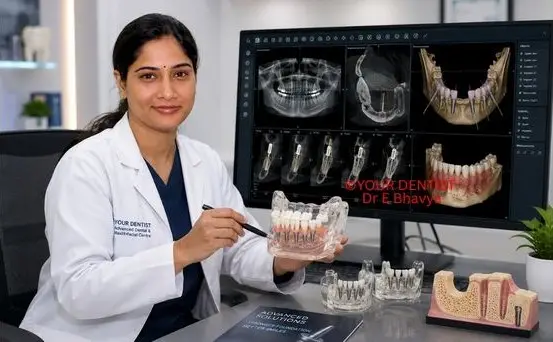
A Cone Beam Computed Tomography (CBCT) scan provides a three-dimensional view of your jawbone, allowing the surgeon to evaluate important details that cannot be seen on a conventional dental X-ray.
A CBCT scan helps assess:
- Bone height, width, and density
- The quality of the remaining cortical bone
- The position of important nerves and blood vessels
- The location of the maxillary sinus
- Available bone for implant placement
- The ideal implant angulation and position
This detailed assessment enables precise treatment planning while reducing unnecessary surgical procedures.
Medical and Lifestyle Assessment
Successful dental implant treatment depends not only on the jawbone but also on your overall health. Before recommending any implant procedure, your surgeon reviews factors such as:
- Medical history
- Uncontrolled diabetes
- Osteoporosis
- Smoking or tobacco use
- Alcohol consumption
- Medications that may affect bone healing
- Nutritional status
- Any ongoing oral infections
Managing these factors improves healing and contributes to long-term implant success.
Choosing the Most Appropriate Treatment
After completing the clinical examination, CBCT evaluation, and medical assessment, your implant surgeon develops a personalized treatment plan.
If sufficient healthy bone is available, advanced implant techniques such as All-on-4®, All-on-6®, Basal Implants, Pterygoid Implants, or Zygomatic Implants may allow implants to be placed without conventional bone grafting.
However, if the evaluation shows that bone grafting is the safest and most predictable option for achieving a stable, long-term result, your surgeon will discuss that recommendation and explain the reasons behind it.
The objective is never to perform additional procedures unnecessarily. Instead, the goal is to recommend the treatment that offers the highest chance of long-term success while minimizing surgical trauma whenever clinically appropriate.
Myth vs Fact: Dental Implants Without Bone Grafting
There are many misconceptions about dental implants and bone grafting. While bone grafting is an effective treatment in certain situations, advances in implant dentistry have made it possible for many patients to receive dental implants without undergoing conventional bone grafting. Here are some common myths and the facts behind them.

Myth 1: If I Have Bone Loss, I Cannot Get Dental Implants.
Fact:
Not necessarily. Many patients with jawbone loss are still candidates for Dental Implants Without Bone Grafting. Advanced treatment options such as All-on-4®, All-on-6®, Basal Implants, Pterygoid Implants, and Zygomatic Implants can often utilize the remaining healthy cortical bone to provide stable implant support. A detailed CBCT scan is essential to determine the most suitable approach for each patient.
Myth 2: Everyone Needs a Bone Graft Before Dental Implants.
Fact:
This is one of the most common misconceptions. Bone grafting is not required for every implant patient. Whether a graft is necessary depends on the amount and quality of available bone, the location of the missing teeth, and the implant technique selected. Many patients can avoid bone grafting through careful diagnosis and advanced treatment planning.
Myth 3: Bone Grafting Is the Only Solution for Bone Loss.
Fact:
Modern implant dentistry offers several advanced alternatives for suitable patients. Techniques such as Basal Implants, Pterygoid Implants, Zygomatic Implants, and All-on-4® can often eliminate the need for conventional bone grafting by utilizing stronger areas of the existing jawbone.
Myth 4: Dental Implants Without Bone Grafting Are Less Successful.
Fact:
Success depends on proper case selection, precise treatment planning, and surgical expertise—not simply on whether a bone graft is performed. When the right implant technique is selected for the patient’s condition, Dental Implants Without Bone Grafting can provide predictable, stable, and long-lasting results.
Myth 5: Bone Grafting Guarantees Implant Success.
Fact:
No dental procedure can be guaranteed. The success of a bone graft depends on many factors, including the patient’s overall health, bone healing capacity, oral hygiene, smoking habits, and compliance with post-operative instructions. Even after a successful bone graft, careful implant planning remains essential for long-term success.
Myth 6: Advanced Implant Techniques Are Suitable for Everyone.
Fact:
Not every patient is a candidate for every implant technique. The most appropriate treatment is determined only after a comprehensive clinical examination, CBCT evaluation, and assessment of your medical and dental history. Every treatment plan should be personalized to achieve the safest and most predictable outcome.
The Bottom Line
The decision to perform a bone graft—or to avoid one—is never based on assumptions. It is based on a detailed evaluation of your jawbone, overall oral health, and individual treatment needs. Modern implant dentistry has expanded the treatment options available, allowing many patients to receive Dental Implants Without Bone Grafting whenever it is clinically appropriate. The key is choosing the right treatment for the right patient.
Real Cases from Our Clinic
At YOUR DENTIST Advanced Dental & Maxillofacial Centre, Vijayawada, we have successfully treated numerous patients with varying degrees of jawbone loss using advanced implant techniques that helped avoid conventional bone grafting whenever clinically appropriate.
Every case begins with a detailed clinical examination, digital smile assessment, and 3D CBCT evaluation. Based on the patient’s bone quality, oral health, and treatment goals, our implant team selects the most suitable implant solution to achieve stable, functional, and long-lasting results with the least invasive approach possible.
Over the years, our team has successfully rehabilitated patients with:
- Single missing teeth
- Multiple missing teeth
- Full-mouth tooth loss
- Severe upper jaw bone loss
- Advanced periodontal (gum disease)–related bone loss
- Complex implant revision cases
Our documented clinical cases include advanced implant treatments such as:
- Single Dental Implants
- Multiple Teeth Dental Implants
- All-on-4® Dental Implants
- All-on-6® Dental Implants
- Zygomatic Implants
- Pterygoid Implants
- Basal Implants
- Immediate Loading Dental Implants using our PATZI Protocol
Each case is carefully documented with pre-operative, intra-operative, and post-operative clinical photographs and radiographs, allowing patients to understand the treatment process and appreciate the long-term outcomes achieved through personalized implant planning.
Rather than recommending the same treatment for every patient, we focus on selecting the most appropriate advanced implant technique based on each individual’s clinical condition. Whenever possible, we utilize the patient’s remaining healthy bone to help avoid unnecessary bone grafting while maintaining long-term implant stability and function.
Under the leadership of Dr. E. Surendranath, an experienced Oral and Maxillofacial Surgeon and Implantologist, our clinic has successfully placed thousands of dental implants using modern evidence-based techniques and advanced digital planning. With years of clinical experience and long-term patient follow-up, we remain committed to providing predictable, patient-centered implant care tailored to every individual.
📷 Patient Case Gallery
The following clinical cases demonstrate how advanced implant techniques can help restore missing teeth while avoiding conventional bone grafting whenever clinically appropriate. Each case reflects a personalized treatment plan based on the patient’s unique bone condition, oral health, and functional requirements.
Why Choose YOUR DENTIST for Advanced Implant Treatment?
Choosing the right implant surgeon is just as important as choosing the right implant technique. Successfully placing Dental Implants Without Bone Grafting requires advanced clinical knowledge, precise diagnosis, digital treatment planning, and experience with a wide range of modern implant solutions.

At YOUR DENTIST Advanced Dental & Maxillofacial Centre, Vijayawada, we believe that treatment should be personalized—not standardized. Every patient undergoes a comprehensive evaluation to determine the most predictable, safest, and least invasive treatment approach based on their individual oral condition.
Experienced Oral & Maxillofacial Implant Team
Our implant treatments are led by Dr. E. Surendranath, an experienced Oral and Maxillofacial Surgeon and Implantologist with extensive experience in advanced dental implant procedures, including complex full-mouth rehabilitation and severe jawbone loss cases.
Our team continually adopts modern, evidence-based implant techniques to provide patients with advanced treatment options that may help avoid conventional bone grafting whenever clinically appropriate.
Advanced Digital Diagnosis and Treatment Planning
Successful implant treatment begins long before surgery.
We utilize advanced digital technologies, including:
- 3D CBCT imaging
- Digital implant planning
- Computer-Guided Implant Surgery
- Digital smile analysis
- Prosthetically driven treatment planning
These technologies allow us to accurately evaluate bone quality, identify important anatomical structures, and select the most appropriate implant technique for each patient.
Expertise in Advanced Implant Solutions
Rather than relying on a single implant approach, we offer a comprehensive range of advanced treatment options, including:
- All-on-4® Dental Implants
- All-on-6® Dental Implants
- Basal Implants
- Pterygoid Implants
- Zygomatic Implants
- Immediate Loading Dental Implants
- PATZI Protocol
- Computer-Guided Implant Surgery
This enables us to develop individualized treatment plans based on each patient’s clinical needs rather than applying the same solution to everyone.
Personalized Care for Every Patient
No two patients have the same bone quality, medical history, or treatment goals.
Before recommending any procedure, we carefully evaluate:
- Medical history
- Oral health
- Bone quality and quantity
- Gum health
- Functional requirements
- Aesthetic expectations
Only after this comprehensive assessment do we recommend the treatment that offers the highest likelihood of long-term success.
Our Commitment to Minimally Invasive Implant Dentistry
Whenever clinically appropriate, our goal is to utilize the patient’s existing healthy bone to reduce unnecessary surgical procedures, shorten treatment time, and minimize patient discomfort.
Our philosophy is simple:
Choose the treatment that provides the most predictable long-term result with the least amount of surgical intervention.
By combining advanced implant techniques with meticulous planning and personalized care, we help many patients restore their smiles without undergoing conventional bone grafting whenever it is clinically appropriate.
Conclusion
The idea that every patient with bone loss must undergo bone grafting before receiving dental implants is one of the most common misconceptions in implant dentistry. While bone grafting remains an effective and appropriate treatment in certain situations, it is not the only solution.
Advances in implant dentistry have made it possible for many patients to receive Dental Implants Without Bone Grafting by utilizing the remaining healthy cortical bone and applying specialized treatment techniques such as All-on-4®, All-on-6®, Basal Implants, Pterygoid Implants, and Zygomatic Implants. These modern approaches can often reduce the number of surgical procedures, shorten treatment time, and help patients achieve stable, long-term implant success whenever clinically appropriate.
The key to successful treatment is accurate diagnosis and individualized treatment planning. Every patient has unique bone anatomy, oral health, and medical considerations. A comprehensive clinical examination, combined with 3D CBCT imaging, allows the implant surgeon to determine whether bone grafting can be safely avoided or whether it remains the most predictable treatment option.
At YOUR DENTIST Advanced Dental & Maxillofacial Centre, Vijayawada, we believe in recommending the treatment that is best for the patient—not simply following a traditional approach. Whenever clinically appropriate, we utilize advanced implant techniques that help many patients restore their smiles with fewer surgical procedures while maintaining long-term function, comfort, and stability.
If you’ve been told that you need a bone graft before receiving dental implants, don’t assume it’s your only option. A detailed clinical evaluation by an experienced implant surgeon may reveal advanced treatment alternatives that are better suited to your individual condition.
Whether you have a single missing tooth, multiple missing teeth, or complete tooth loss, the right treatment begins with the right diagnosis. With modern implant dentistry and personalized treatment planning, many patients can successfully restore their smiles without conventional bone grafting while achieving predictable, long-lasting results.