Computer-guided dental implants
Computer-Guided Dental Implants in Vijayawada – Precision and Accuracy for Optimal Implant Placement
Computer-guided dental implants utilize advanced technology to ensure the precise placement of dental implants, improving both the accuracy and outcome of the procedure. Using 3D imaging and digital planning, this technique minimizes errors, enhances the efficiency of the surgery, and reduces recovery times.
At YOUR DENTIST Advanced Dental & Maxillo-Facial Centre, Vijayawada, we specialize in computer-guided implant surgery, offering patients the benefit of advanced planning and high-precision procedures to achieve the best possible results.
What Are Computer-Guided Dental Implants?
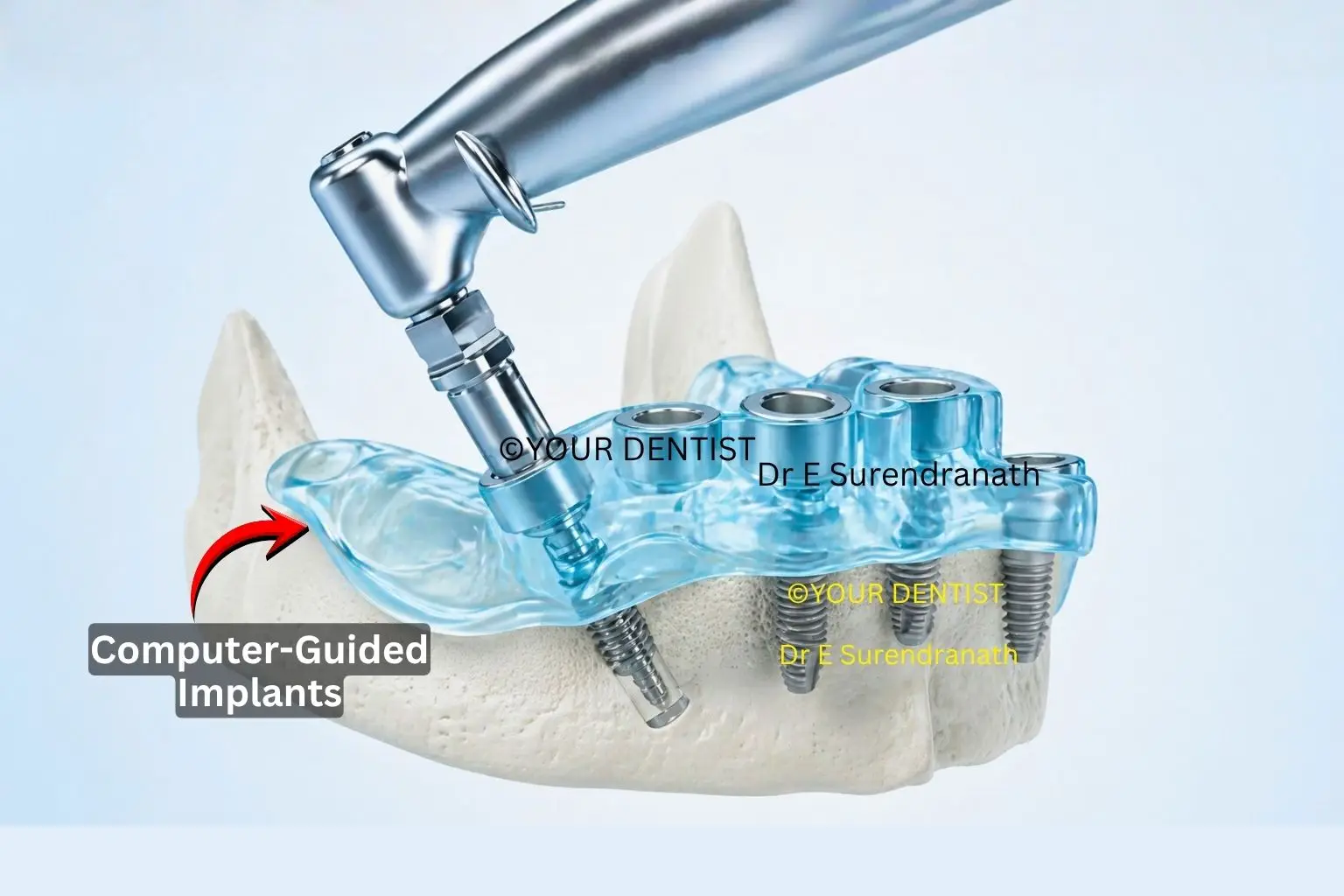
Computer-guided dental implants are a modern approach to dental implant placement. Using sophisticated 3D imaging and digital implant planning, we can create a detailed map of your mouth and jaw. This map is then used to guide the implant placement process, ensuring that the implants are positioned in the optimal location for the best outcome.
This technology allows for precise placement with minimal incisions, reducing the overall invasiveness of the procedure, speeding up recovery time, and improving the overall success rate of the implants.
Why Choose Computer-Guided Dental Implants?
Computer-guided dental implants offer several significant advantages:
- Precision and Accuracy: The use of 3D imaging and digital planning ensures that implants are placed in the most optimal position for both aesthetics and function.
- Reduced Surgical Risk: With precise planning, the chances of complications or errors during surgery are minimized.
- Minimized Invasiveness: The computer-guided technique allows for smaller incisions, reducing trauma to the surrounding tissue and speeding up the recovery process.
- Faster Healing: The minimally invasive nature of the surgery leads to less post-operative discomfort and a quicker recovery time.
- Enhanced Success Rates: Computer-guided dental implants have a higher success rate due to the precise placement and planning that optimizes the integration of the implants with the bone.
Who Needs Computer-Guided Dental Implants?
Computer-guided dental implants are ideal for patients who:
- Require precise implant placement for full-arch restoration or single tooth implants
- Have complex anatomical considerations (e.g., limited bone volume, sinus issues, or proximity to sensitive structures like nerves)
- Want to minimize surgery time and recovery time
- Are seeking a more predictable and accurate dental implant procedure
Benefits of Computer-Guided Dental Implants!
✔ High Precision and Accuracy:
Computer-guided dental implants ensure that each implant is placed with exact precision, resulting in better functionality and aesthetic outcomes.
✔ Reduced Surgical Time:
With detailed planning and pre-surgical analysis, the surgery is more efficient, reducing the time spent in the operating room.
✔ Minimized Post-Operative Discomfort:
The less invasive nature of the procedure leads to a more comfortable recovery with fewer complications and faster healing.
✔ Lower Risk of Implant Failure:
The accuracy provided by computer-guided techniques results in a higher success rate for implant placement, ensuring long-term stability and function.
Treatment Procedure for Computer-Guided Dental Implants
The procedure for Computer-guided dental implants follows a structured process for maximum accuracy and success:
1️⃣ Initial Consultation and Examination:
A comprehensive examination is conducted to assess your oral health, bone structure, and suitability for Computer-guided dental implants.
2️⃣ 3D CBCT Imaging:
A 3D CBCT (Cone Beam Computed Tomography) scan is taken to capture detailed images of the jawbone, teeth, and surrounding structures, providing an accurate map of your oral anatomy.
3️⃣ Digital Implant Planning:
Using advanced software, the 3D scan is analyzed to determine the most precise location for implant placement. This step helps in planning the optimal angle, depth, and position of the implant.
4️⃣ Creation of a Surgical Guide:
A custom surgical guide is created based on the digital planning. This guide ensures that the implants are placed precisely where planned, minimizing human error during the surgery.
5️⃣ Implant Placement Surgery:
The implants are placed with the help of the surgical guide, which is positioned over the gums, ensuring accurate and efficient placement.
6️⃣ Temporary Teeth Placement:
In many cases, temporary prosthetic teeth are placed immediately after surgery, allowing patients to enjoy functional teeth while the implants heal.
7️⃣ Final Prosthetic Restoration:
After the healing process, permanent zirconia or ceramic teeth are placed on the implants, completing the restoration and providing a permanent, functional smile.
Technology Used at OUR Clinic for Computer-Guided Dental Implants
At YOUR DENTIST Advanced Dental & Maxillo-Facial Centre, Vijayawada, we use the latest technology to ensure precision in every aspect of the computer-guided implant procedure:
- 3D CBCT Imaging for accurate analysis of bone structure and implant site
- Digital Implant Planning using Blue Sky Bio software
- Custom Surgical Guides created for precise implant placement
- Guided Implant Surgery to ensure optimal accuracy during the procedure
- In-house CAD/CAM Prosthetic Design for custom restorations
- In-house Zirconia Milling Lab for high-quality, durable prosthetics
These technologies work together to provide accurate and predictable implant outcomes.
Recovery After Computer-Guided Implant Surgery
Recovery after computer-guided implant surgery is generally smooth and faster than traditional methods:
- Mild swelling and discomfort for 2–3 days
- Soft diet recommended for the first few weeks to avoid putting stress on the implants
- Most patients can resume their regular activities within a few days
- Temporary teeth are often placed immediately, with final prosthetics placed after healing
- Regular follow-up appointments ensure proper healing and implant stability
Aftercare for Computer-Guided Dental Implants
Proper aftercare is crucial for the long-term success of computer-guided implants:
- Oral Hygiene: Brush and floss regularly to prevent infection and ensure implant stability.
- Follow-up Appointments: Regular check-ups to ensure healing is progressing and the implants are stable.
- Dietary Guidelines: Avoid hard or sticky foods during the initial recovery phase to protect the implants.
- Professional Cleaning: Have regular cleaning sessions every 6 months to maintain oral health and implant function.