
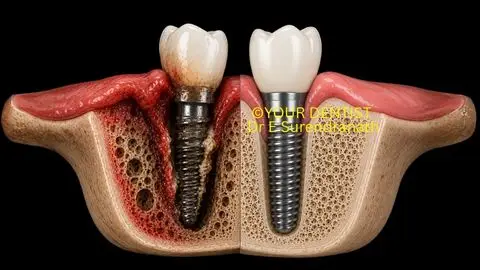
What Is Dental Implant Failure Vijaywada?
Dental Implant Failure Vijayawada refers to the rejection or failure of a dental implant to integrate properly with the jawbone. This may lead to:
- Pain
- Infection
- Implant mobility
- Failure of function
What Are Dental Implants?
Dental implants are screw-like titanium structures inserted into the jawbone to replace missing teeth. They act as a supportive root for artificial teeth, helping to restore both function and aesthetics.
Indications for Dental Implants
Dental implants are recommended in the following cases:
- Missing or extracted teeth
- Root canal failure
- Congenitally missing teeth
- Completely edentulous arches (no teeth)
- Partially edentulous arches
Benefits of Dental Implants
Dental implants offer several advantages:
- Replace only the missing tooth without affecting neighboring teeth (unlike bridges)
- Strong and function like natural teeth
- Provide a natural look.
- Improve chewing and eating ability.
- Help preserve jawbone (prevent bone loss)
- Long-term solution
- Biocompatible with bone and gums
- No risk of cavities
- Improve confidence (no looseness like dentures)
Dental implant placement is a highly skilled procedure that requires proper planning, knowledge, and expertise.
Causes of Dental Implant Failure Vijayawada
1. Surgical Factors
- Improper planning
- Incorrect evaluation of bone quality
- Lack of proper imaging (X-rays, advanced diagnostics)
- Improper sterilization
- Incorrect implant selection
- Inadequate surgical knowledge or technique
Choosing an experienced surgeon and a proper clinical setup significantly improves success rates.
2. Patient-Related Factors
- Smoking
- Poor oral hygiene
- Not following post-operative instructions.
- Not taking prescribed medications.
- Infections (peri-implantitis)
- Systemic diseases
- improper masticatory forces
- severe bruxers
- infected teeth adjacent to implants
3. Lifestyle Factors
- Poor oral care habits
- Smoking
- Excessive alcohol consumption
- Poor diet
4. Mechanical Factors
- Excessive biting forces
- Teeth grinding (bruxism)
5. Medical Factors
- Diabetes
- Use of certain medications (e.g., bisphosphonates)
- Vitamin deficiencies
- Genetic factors
- Rheumatoid arthritis or bone disorders
- Cardiac conditions
Signs of Dental Implant Failure Vijayawada
Dental Implant Failure Vijayawada: common warning signs include:
- Swelling and inflammation in the gums
- Pain or discomfort
- Loose or mobile implant
- Bleeding gums
- Bone loss around the implant
- Difficulty in healing
Early detection is crucial to preventing complete failure.
Who Is Responsible for Dental Implant Failure Vijayawada?
Dental Implant Failure Vijayawada usually occurs due to a combination of factors, including:
- Surgical technique
- Surgeon’s expertise
- Patient health
- Oral hygiene
- Lifestyle habits
Peri-implantitis (infection around the implant) is one of the most common causes of implant failure.
Prevention of Dental Implant Failure Vijayawada
To improve implant success:
- Choose an experienced implant surgeon.
- Maintain good oral hygiene.
- Quit smoking and alcohol habits.
- Maintain overall health
- Attend regular dental check-ups.
- Follow all post-operative instructions carefully.
Prevention is always better than a cure.
What to Do If Dental Implant Failure Occurs?
If you are experiencing implant mobility, pain, infection, or bone loss around an implant, professional evaluation is essential. Learn more about our Failed Dental Implant Treatment solutions, including implant revision, removal, and replacement options.
If an implant fails, several options are available:
- Early intervention and treatment by your dentist
- Removal of the failed implant
- Allowing healing time for bone recovery
- Treating infections and deficiencies
- Planning for re-implant placement (usually after 3–6 months)
Treatment Options After Implant Failure
- Re-implantation after healing
- Dental bridge (may require trimming adjacent teeth)
- Removable prosthesis (temporary option)
During the healing process, a removable prosthesis may be used until the final treatment is completed.
Conclusion
Dental implants today have a very high success rate (over 95%) due to advances in technology and surgical techniques.
However, Dental Implant Failure Vijayawada can still occur due to multiple factors such as patient health, surgical technique, and maintenance.
Proper planning, correct surgical approach, and good patient compliance are essential for long-term success.
Maintenance plays a key role:
- Good oral hygiene
- Regular check-ups
- Healthy diet and supplements
- Control of systemic conditions like diabetes
If an implant fails, proper treatment planning and giving adequate healing time can help achieve successful re-implantation.
Choosing the right surgeon and following proper care protocols greatly increases the success rate of dental implants.